Santa Barbara public records refer to official documents created and maintained by government agencies in Santa Barbara County for public use. These records include court filings, property details, vital records, and administrative files. In Santa Barbara County, these records support transparency records and allow residents to verify legal, financial, and personal information within the public information system. Various departments contribute to government documentation, and each maintains structured databases for organized public data availability. Users rely on legal record access to confirm facts and review history for property or identity decisions.
Public records in Santa Barbara County serve many practical purposes for residents, businesses, and researchers. People search these records for legal record access, property verification, background checks, and historical research. The county’s public information system organizes government documentation across courts, recorder offices, and other departments, making public data availability more consistent. Transparency records help maintain accountability by allowing users to review official actions and filings. Through structured databases and request systems, individuals can obtain accurate information for personal, legal, or financial needs while relying on verified sources maintained by local agencies.
What are Public Records in Santa Barbara County
Public records in Santa Barbara County include official documents created, received, or maintained by government agencies as part of their duties. These records are part of a structured document registry that supports public accountability and record classification across departments. In general, most official records fall under public records search Santa Barbara County Court when they are not restricted by law. These materials include legal documentation such as court filings, property data, and administrative files stored in county archives. Public access helps residents review verified information held within the county’s public information system.
Public vs Restricted Records
Public records are open for review, while restricted records remain protected by privacy laws or legal limitations. Restricted records often include sensitive details such as confidential legal files, sealed court cases, or personal data protected under state or federal rules. Record classification determines which documents qualify for public viewing and which require authorization. For example, some court records may be partially sealed, and certain vital records may only be available to authorized individuals. This distinction helps balance transparency with privacy while maintaining secure handling of official records across county departments.
Categories of Records Maintained Across Departments
Santa Barbara County organizes records into several key categories managed by different agencies. Each category supports a specific function within the county’s document registry. These official records are stored in county archives and managed by departments such as courts, the recorder’s office, and clerk offices. Each department follows specific procedures for maintaining legal documentation and updating records over time.
- Court records: Civil, criminal, family, and probate case files
- Property records: Deeds, liens, ownership history, and land transactions
- Vital records: Birth, death, and marriage certificates
- Business filings: Business licenses, registrations, and entity records
Role of County-Level Governance in Maintaining Records
County-level governance plays a central role in organizing, maintaining, and regulating public records. Agencies follow standardized procedures to collect, store, and update official records within the document registry. This structure supports consistent record classification and helps maintain accurate county archives. Public offices such as the courts and recorder’s office manage their own record systems while aligning with county-wide policies. As a result, public records search Santa Barbara remains organized across departments, allowing users to locate relevant legal documentation through coordinated government systems.
How to Search Court Records
Court record search Santa Barbara typically begins with identifying key details such as a party name, case number, or filing date to refine the query within official systems. Users then review indexed results through authorized online portals or public terminals provided by the court. After locating the relevant case, they can view summaries or request full official documents depending on record availability and access permissions.
Go to the Court’s Official Homepage
- Open the official website: https://www.santabarbara.courts.ca.gov/
- From the homepage, locate the main menu and click “Online Services.”
Open Case Records Search
- Inside Online Services, select “Case Records Search.”
- The system will display a User Agreement page before continuing.
Accept the User Agreement
- Read the terms on the User Agreement screen.
- Check the agreement box to confirm acceptance.
- Click the button to proceed to the next screen.
Select Public Portal
- After accepting the agreement, click “Public Portal.”
- This opens the main search interface used for public record queries.
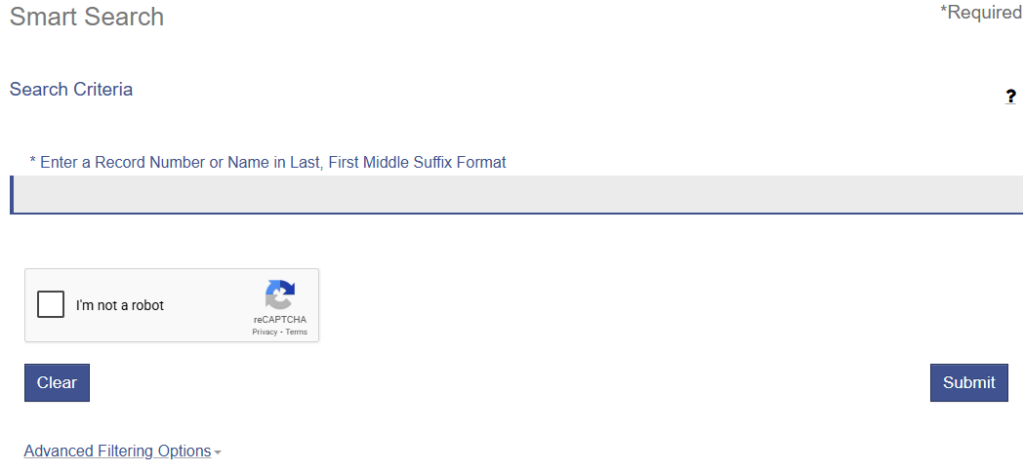
Choose Smart Search
- On the Public Portal page, select “Smart Search.”
- Smart Search allows record lookup using names or case-related details.
Enter Search Details
- Enter the required information such as:
- Party name
- Case number
- Use correct spelling for better database query results.
- Apply any available filters such as case type or date range if shown.
View and Select Results
- Review the list of matching cases returned by the case search system.
- Click on a case number to view details such as:
- Register of actions
- Case status
- Related filings
Review Record Information
- Open individual entries to view official records available in the public information retrieval system.
- Some documents may be limited due to privacy rules or restricted record classification.
If Records Are Not Fully Available
- For records not shown online, use the court’s records division request options.
- Visit the courthouse or submit a formal request for certified copies of official records.
Public Record Categories and Their Uses
Government records Santa Barbara include a wide range of official documents created and maintained by local agencies for legal, administrative, and informational purposes. These legal documents form part of registry data managed across courts, recorder offices, and county departments in Santa Barbara County. Each category serves a specific function, from tracking court activity to maintaining ownership records and verifying identity details. Public access to these administrative records supports record classification, transparency records, and organized public information systems used by residents, businesses, and researchers.
Judicial Records
Judicial records include civil and criminal filings maintained by the court system. These legal documents cover case complaints, responses, motions, and final rulings. They also include case outcomes, hearing schedules, and judgments recorded in official filings. Courts maintain these records within structured registry data that tracks each case from filing to resolution. These judicial records help users review legal history, verify case status, and examine court decisions. They are a key part of government records Santa Barbara and support legal record access through organized case search systems.
- Civil disputes such as contract or property disagreements
- Criminal cases involving charges, hearings, and verdicts
- Family law matters like custody or support cases
- Probate and small claims filings
Property and Land Records
Property and land records document ownership records and real estate transactions within the county. These administrative records are maintained by the county recorder’s office and form part of official registry data for land and property. These official filings help users trace ownership history and confirm property details. They are widely used in real estate transactions, legal verification, and historical research. Property records also support transparency records by making land-related information part of the public record system.
- Deeds: Show transfer of property ownership between parties
- Liens: Indicate claims against a property due to unpaid debts
- Transfers: Record changes in ownership over time
- Maps and plats: Provide property boundaries and layouts
Vital and Personal Records
Vital records include essential personal documentation such as birth and death certificates. These records are maintained by county agencies as part of official filings that document key life events marriage and divorce records are also included within this category of legal documents. Access to these legal documents may be restricted to authorized individuals to protect privacy. However, they remain an important category of government records Santa Barbara, contributing to structured registry data and verified identity records within the county’s administrative systems.
Uses include:
- Identity verification
- Genealogy and family history research
- Legal name changes and estate matters
- Proof of relationships for legal purposes
Business and Regulatory Records
Business and regulatory records include documentation related to business registrations, licenses, and permits issued by county departments. These administrative records track business activity and compliance with local regulations. These official filings support ownership records for businesses and help users verify the legitimacy of companies operating within the county. They also contribute to public information systems by maintaining accurate and searchable registry data.
- Business entity registrations
- Operating licenses and permits
- Zoning approvals and regulatory filings
- Tax-related registrations
Digital Access to Santa Barbara Public Records
Public information system Santa Barbara relies on online platforms and digital databases that store and organize official documents across multiple county departments. These systems include electronic filing systems, online records platforms, and digital archives that support public access to government data. In Santa Barbara County, digital systems allow users to retrieve registry data, legal documents, and administrative records without relying solely on physical files. This shift toward e-records systems improves record classification, speeds up document retrieval, and strengthens the overall structure of government records Santa Barbara.
Role of Online Portals and Digital Databases
Online portals act as the primary interface for public interaction with digital records. These platforms connect users to centralized databases that store indexed legal documents, case files, and property information. Through electronic filing systems, government agencies update records in real time, allowing data to remain current and organized. These tools support public information retrieval by enabling structured queries across large volumes of registry data. As a result, users can locate official records efficiently while relying on verified government sources.
- Searchable databases for court, property, and business records
- Index-based retrieval using names, case numbers, or document IDs
- Secure storage of official filings within digital archives
- Integration with department-level record systems
Centralized vs Department-Specific Systems
Digital access to public records Santa Barbara operates through both centralized and department-specific systems. Centralized platforms combine multiple record types into a single online records platform, while department-specific systems focus on specialized data such as court cases or property filings. Together, these systems create a layered public information system Santa Barbara that balances wide accessibility with specialized record management.
Centralized systems provide:
- Unified search across multiple record categories
- Consistent interface for different document types
- Broader access to registry data
Department-specific systems offer:
- Detailed access to specialized records
- Higher accuracy within a focused dataset
- Tailored electronic filing systems for each agency
Remote Access vs On-Site Systems
Remote data access allows users to view many public records through online portals without visiting physical offices. These e-records systems support searches, document previews, and in some cases, certified copy requests. On-site systems, such as public terminals at courthouses or recorder offices, provide additional access to records that may not be fully available online. Remote access offers convenience and speed, while on-site systems may provide expanded access to archived or restricted files. Both methods operate within the same public information system Santa Barbara framework, ensuring continuity between digital archives and physical records.
How Digital Records Improve Transparency and Efficiency
Digital records improve transparency by making government documentation easier to review and verify. Online records platforms allow residents to examine legal documents, property details, and administrative records through structured search tools. Electronic filing systems reduce processing time, minimize manual errors, and keep registry data consistently updated. In addition, digital archives support long-term preservation of official records while enabling quick public access. This combination strengthens accountability and ensures that government records Santa Barbara remain organized, searchable, and accessible through modern public information systems.
Record Retrieval Considerations
Record retrieval Santa Barbara involves obtaining official document copies from county agencies that maintain government records Santa Barbara. These records may come from courts, recorder offices, or other departments that manage administrative records within structured systems. The type of record, its classification, and the purpose of the request determine how it is issued and what limitations apply. Access restrictions, verification requirements, and administrative rules all play a role in how document copies are processed and delivered through official channels in the public information system.
Certified vs Uncertified Copies
Certified and uncertified document copies serve different purposes in record retrieval Santa Barbara. Certified records include an official seal or stamp that confirms authenticity, making them suitable for legal proceedings, court submissions, or financial verification. Uncertified copies, on the other hand, are informational and used for general review or research. These do not carry legal validation but still reflect accurate registry data from official filings. Certified copies usually require identity verification and may involve additional administrative fees. The choice between certified and uncertified copies depends on how the document will be used. Agencies apply record classification rules to determine eligibility and issuance format within the public information system.
- Court filings requiring proof of authenticity
- Property transactions needing verified ownership records
- Legal documentation for official applications
Processing Times and Verification Requirements
Processing times for record retrieval Santa Barbara depend on the type of request, the department involved, and whether the record is stored digitally or in physical archives. Digital systems often allow quicker request processing, while archived documents may require manual retrieval. Verification requirements are applied to confirm identity and eligibility before releasing certain records, especially for sensitive or restricted files. These steps help maintain the integrity of administrative records and ensure proper handling of official documents. Each request is reviewed through established procedures to ensure accuracy and compliance with legal documentation standards. This process supports consistent handling of public records across departments.
Factors that influence processing include:
- Record type and classification
- Availability in digital or physical format
- Volume of requests received
- Need for identity verification
Fees Associated with Document Retrieval
Administrative fees are commonly associated with record retrieval Santa Barbara and vary depending on the type of document copies requested. Certified records typically involve higher fees due to verification and certification processes, while uncertified copies may cost less. Fees may also depend on the number of pages, search effort, and format of delivery. Payment is usually required before or at the time of request processing. These fees support the maintenance of public information systems and help cover the cost of managing registry data and administrative records across county departments.
- Search and retrieval charges
- Certification fees for official records
- Copying or duplication costs
- Mailing or delivery charges when applicable
Processing Time and Fees
Processing times and associated fees for record retrieval Santa Barbara vary based on record type, format, and whether the request is handled digitally or through physical archives. Certified copies, manual searches, and special requests may involve longer timelines and higher administrative charges compared to standard digital document copies.
| Request Type | Processing Time | Typical Fees |
|---|---|---|
| Online digital record request | Same day to 2 business days | $0 – $15 per document |
| Standard document copy request | 2 – 5 business days | $15 – $40 per document |
| Certified copies | 3 – 7 business days | $25 – $50 per document |
| Archived or physical records | 5 – 15 business days | $20 – $75+ per request |
| Expedited requests | 1 – 3 business days | Additional $10 – $25 |
Limitations Due to Privacy or Legal Restrictions
Not all records are available for public release due to access restrictions established under privacy and legal regulations. Some official records may be sealed, partially redacted, or limited to authorized individuals only. These restrictions protect sensitive personal information while maintaining a balance with public transparency. In many cases, record classification determines whether a document is fully public, restricted, or confidential. These limitations ensure that record retrieval Santa Barbara complies with legal standards while still supporting controlled access to government records Santa Barbara through authorized channels.
- Sealed court cases or confidential legal documents
- Personal identifiers protected under privacy laws
- Restricted vital records requiring proof of eligibility
- Redacted information within public filings
Data Privacy and Access Limitations
Santa Barbara public records include a wide range of official documents, but not all records are available for public viewing. Certain files are protected under privacy laws and legal exemptions that limit how confidential records are shared. In Santa Barbara County, access to restricted documents is governed by state and federal regulations that define what qualifies as public information and what must remain private. These rules help maintain a balance between transparency and the protection of sensitive data within government systems. Agencies regularly review access policies to align with updated statutes and compliance standards. This structured approach ensures consistent handling of records across departments while preserving accountability.
Records Not Publicly Accessible
Some records are excluded from public access due to their classification or sensitivity. Restricted documents may include personal details, ongoing investigations, or records that contain sensitive legal or financial information. While many santa barbara public records are open for review, others are withheld to protect individuals and organizations. These limitations ensure that public information systems do not expose data that could lead to identity theft, legal complications, or misuse of sensitive details. Access controls are applied consistently to prevent unauthorized viewing of protected content. This approach supports both data security and responsible public data availability across government systems.
- Social security numbers and personal identifiers
- Ongoing criminal investigation files
- Certain juvenile court records
- Confidential administrative records
Sealed or Confidential Files
Sealed information refers to records that a court has officially closed from public view. These confidential records are typically accessible only to authorized parties, such as attorneys or individuals involved in the case. Sealing may occur due to privacy concerns, court orders, or statutory requirements. Even within government databases, these files remain hidden from standard search results and require special authorization to view. This process ensures that sensitive legal documentation is protected while maintaining the integrity of the judicial system. Courts maintain strict protocols for handling sealed materials to prevent unauthorized disclosure. Additional permissions or motions may be required to access such files legally.
Legal Frameworks Governing Access
Access to santa barbara public records is guided by legal frameworks such as the California Public Records Act and related privacy laws. These regulations define how government agencies handle requests for official documents and outline exemptions for restricted data. Legal exemptions may apply to law enforcement records, personnel files, or records involving protected individuals. Agencies follow standardized procedures to determine whether a document can be released or must remain confidential. Compliance checks and internal review processes help ensure proper classification of each request. These legal structures provide consistency across departments while supporting lawful transparency in public record handling.
Reasons Certain Data Is Restricted
Certain data is restricted to protect privacy, maintain security, and comply with legal requirements. Confidential records help prevent unauthorized disclosure of sensitive information and reduce risks such as identity theft or misuse of personal data. Restrictions also support ongoing legal proceedings by preventing interference or bias. By applying consistent privacy laws and access controls, public agencies ensure that santa barbara public records remain available where appropriate while safeguarding confidential records that require protection. These restrictions also help maintain public trust in government systems. Controlled access ensures that only eligible users can view sensitive materials while general records remain accessible through official channels.
Location and Contact Information
Government records Santa Barbara are managed through official county offices within Santa Barbara County. The main offices include the Superior Court for judicial records and the Clerk-Recorder for property, vital, and official filings. These departments operate as the primary public records office where residents can request documents, verify information, and submit in-person record requests.
County Courthouse – Superior Court
The judicial records are maintained by the Superior Court of California, County of Santa Barbara. This courthouse handles civil, criminal, family law, probate, and traffic case records. Public terminals and records divisions are available for case-related inquiries and document requests.
Main Courthouse Address:
1100 Anacapa Street
Santa Barbara, CA 93101
Phone: (805) 882-4520
Hours: Monday–Friday, typically 8:00 AM – 4:00 PM (hours may vary by department)
Clerk-Recorder Office
Main Office Address:
1100 Anacapa Street (First Floor)
Santa Barbara, CA 93101
Phone: (805) 568-2250
Hours: Monday–Friday, typically 8:00 AM – 4:30 PM
Frequently Asked Questions
Santa Barbara public records cover a wide range of official documents maintained by county departments and judicial offices. This FAQ section addresses common questions related to public records search Santa Barbara, including online records, court record search, and document lookup processes. It helps users better understand public access records, available data types, and limitations linked to privacy laws. These answers reflect how government databases organize registry data and how users can interpret results from official systems within Santa Barbara County.
What are Santa Barbara public records?
Santa Barbara public records and public records search Santa Barbara refer to official documents maintained by county agencies and made available under specific public access rules. These records include legal documents, property information, vital records, and administrative filings stored within structured government databases in Santa Barbara County. They support government transparency by allowing users to review verified data through online records platforms and physical offices. Public access records help residents, businesses, and researchers perform document lookup, review court record search results, and confirm information held in official registry systems.
Are public records accessible online in Santa Barbara?
Santa Barbara public records are created and maintained by government departments responsible for judicial, property, and administrative documentation. These records include court filings, deeds, marriage certificates, and business registrations that form part of a county’s official registry data. Public records search Santa Barbara systems allow users to locate indexed summaries of these documents through online portals, while full document copies may require formal requests. Although many records are available digitally, some remain accessible only through in-person visits or authorized requests depending on their classification and availability within government databases.
What types of records can be searched?
A public records search Santa Barbara can include several categories of records depending on the type of information required. Common examples include court records such as civil and criminal cases, property records like deeds and liens, vital records such as birth and marriage certificates, and business filings including licenses and registrations. Each category is maintained by a specific department and organized within government databases for efficient retrieval. Users can perform document lookup using identifiers like names, case numbers, or property details, which are matched against indexed data in online records systems.
Are there any restrictions on public record access?
Certain Santa Barbara public records are subject to restrictions due to privacy laws and legal exemptions. Sensitive documents such as sealed court cases, juvenile records, and confidential personal data may not be publicly available through standard public access records systems. These restrictions help protect individual privacy and ensure compliance with legal requirements. Some records may also be partially redacted or limited to authorized users only. As a result, not all information appears in a public records search Santa Barbara, especially when confidentiality rules apply to specific document classifications within government records.
How accurate are online record searches?
Online records used in public records search Santa Barbara are generally reliable because they are sourced directly from official government databases. However, accuracy may vary depending on how recently records were updated and how data is entered into the system. Some document lookup results may show summaries rather than full filings, and updates across departments may take time to synchronize. Users may verify important details by requesting certified copies from official offices. Overall, public access records provide a useful and efficient way to review registry data, though certified documents remain the most authoritative source for legal and official purposes.