Santa Barbara Court Calendar presents a structured listing of daily and upcoming proceedings handled by the Santa Barbara County Superior Court in Santa Barbara. It organizes court activities such as hearings, motions, and trials into an easy-to-read format that reflects courtroom assignments and scheduled times. Each entry in the calendar connects to a specific case, department, or judge, which helps users identify where and when a matter will be heard. The calendar also reflects updates like continuances or cancellations, keeping the schedule aligned with real-time court activity. Users can review different divisions such as civil, criminal, and family matters within the same system. This makes it simpler to track multiple cases without confusion.
Users often search this court schedule to verify hearing dates or follow the progress of a case through the system. Attorneys, litigants, and members of the public use trial calendar listings and docket information to track case movement. Through case lookup tools, users can locate relevant entries using case numbers or party names, which makes it easier to stay informed about scheduled proceedings and upcoming court events. Many also check updates frequently to avoid missed appearances or changes in timing. This consistent reference supports better planning and awareness for anyone involved in legal proceedings.
What is Santa Barbara Court Calendar System
The Santa Barbara court calendar system organizes scheduled hearings, trials, and court activities managed by the Santa Barbara County Court in Santa Barbara. It brings together session calendar entries, courtroom assignments, and case scheduling details into a single structured view. Users rely on this system to track docket information linked to specific cases and to confirm upcoming court appearances. It supports clear visibility of proceedings across civil, criminal, family, and probate matters, helping users follow case progress with accurate timing and department details.
What a Court Calendar Includes
A court calendar includes structured records that outline key details for each scheduled court event. Each entry usually lists the case number, party names, hearing type, date, time, and assigned courtroom or department. It may also show judge assignments and current case status, which helps users verify where a hearing will take place. These elements form part of the official court docket and support reliable case lookup. Users can review this information to confirm session timing, avoid confusion, and stay updated on any changes in scheduled proceedings across different case types.
- Case identification details for quick reference
- Hearing type such as motion, arraignment, or trial
- Scheduled time and courtroom location
- Judge or department handling the matter
- Updates like continuances or cancellations
Types of Cases Listed
The court calendar includes multiple categories of cases handled within the court system. Civil cases involve disputes between parties, such as contract issues or property claims. Criminal cases cover alleged violations of law that proceed through formal hearings and trials. Family cases include matters like divorce, custody, and support, while probate cases deal with estates, wills, and related administration. Each category follows its own case scheduling process, yet all appear within the same docket framework. This structure allows users to filter sessions and locate hearings that match their specific case type.
- Civil cases: disputes involving contracts, property, or damages
- Criminal cases: alleged violations of law
- Family cases: divorce, custody, and support matters
- Probate cases: estate administration and wills
Daily vs Weekly Calendars
Court calendars are often presented in both daily and weekly formats to support different user needs. A daily session calendar lists hearings scheduled for a specific date, including exact times and courtroom assignments. This view helps users focus on immediate appearances and short-term planning. Weekly calendars, on the other hand, group multiple days together, allowing users to review upcoming hearings across a broader time frame. Both formats display docket information and reflect updates such as rescheduled hearings, cancellations, or added entries, helping users stay aligned with current case scheduling.
- Daily calendars show hearings for a specific date
- Weekly calendars provide a broader schedule view
- Both include courtroom assignments and time details
- Updates reflect changes in hearing dates or sessions
Department-Wise Scheduling
Department-wise scheduling organizes cases based on subject matter and courtroom assignments within the court system. Each department handles specific types of cases, such as civil, criminal, family, or probate matters. The calendar clearly indicates which department or courtroom is assigned to each hearing, along with the judge responsible for the session. This structure helps users identify the correct location and timing for their case. It also improves clarity in the court docket by grouping similar case types under dedicated departments, which supports efficient case lookup and tracking of scheduled proceedings.
How to Search Santa Barbara Court Calendar Online
The court schedule santa barbara can be searched through the official website of the Santa Barbara County Superior Court. Users can perform a santa barbara trial calendar check and run a docket search santa barbara using the online case lookup tools provided on the site.
Official website: https://www.santabarbara.courts.ca.gov/
Open the Official Court Website
- First, go to the Santa Barbara Superior Court’s official site: https://www.santabarbara.courts.ca.gov/
Go to Online Services
- On the homepage menu, find and click “Online Services.”
- This section includes tools for court calendars, case records search, e-filing, and more.
Select Court Calendars
- In the Online Services list, choose “Court Calendars.”
- This opens the court calendar search area where you can view schedules for hearings and trials.
Read and Accept the Usage Agreement
- Before using the calendar tool, you may need to accept a usage agreement acknowledging that the online data is provided “as is” and may not be the official certified court record.
- Agree to continue.
Choose a Calendar Type
Once inside the calendar search tool, pick the type of calendar you want:
- Civil Calendar – for civil case hearings and management conferences
- Criminal Calendar – for criminal case hearings
- Other divisions if available (e.g., family or probate)
Filter by Case Type or Hearing Type
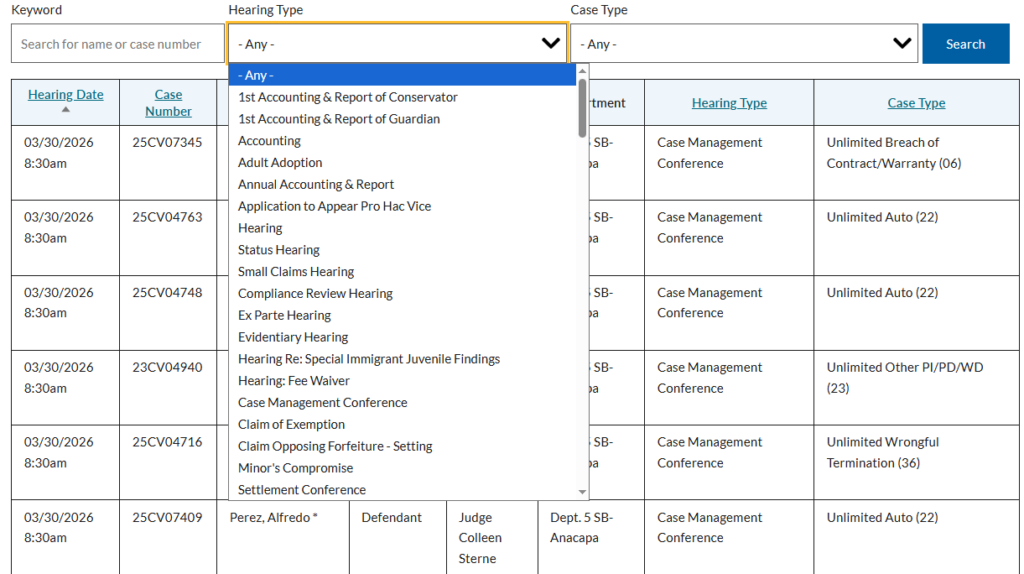
In the calendar interface (especially for civil), you’ll see fields such as:
- Keyword / Search for name or case number
- Hearing Type
- Case Type
- Entering these helps narrow results.
Enter Your Search Details
You can search using:
- Case number
- Party name
- Hearing type
- Case type
View the Court Schedule Santa Barbara
After submitting, the calendar displays a list of scheduled hearings with details such as:
- Hearing date and time
- Case number and party name
- Judicial officer or department
- Hearing type and case type
Types of Court Hearings Listed in the Calendar
The Santa Barbara court hearings schedule provides a structured list of case hearings, trial dates, and court proceedings managed by the Santa Barbara County Superior Court. Users rely on the hearing calendar lookup to review upcoming sessions, confirm hearing dates, and track different types of case hearings. The calendar organizes entries by case category, courtroom, and department, which helps users quickly identify relevant proceedings and plan accordingly. Each hearing type follows specific procedures, and the calendar reflects these distinctions clearly across civil, criminal, family, probate, and trial matters.
Civil Hearings
Civil hearings involve disputes between individuals, businesses, or organizations. These hearings often include motion hearings, case management conferences, and settlement conferences. The calendar lists hearing dates along with courtroom assignments and judge details. Users review civil case hearings to track lawsuits involving contracts, property disputes, or personal injury claims. The hearing calendar lookup allows users to filter civil matters by case number or party name, making it easier to follow ongoing court proceedings and upcoming trial dates.
- Motion hearings for legal requests before trial
- Case management conferences for scheduling updates
- Settlement conferences to resolve disputes before trial
- Trial setting conferences to confirm trial readiness
Criminal Hearings
Criminal hearings relate to cases where an individual is charged with violating the law. These include arraignments, bail hearings, pre-trial conferences, and sentencing hearings. The Santa Barbara court hearings schedule displays these entries with clear hearing dates and courtroom information. Users may search the calendar to monitor court proceedings tied to specific criminal cases. Each entry in the docket reflects updates such as continuances or changes in trial dates, helping users stay informed about case movement within the criminal division.
- Arraignments for formal charges and pleas
- Bail hearings to determine release conditions
- Pre-trial conferences for case preparation
- Sentencing hearings after a verdict or plea
Family Law Hearings
Family law hearings cover matters such as divorce, child custody, child support, and spousal support. These case hearings are listed in the calendar with assigned departments and scheduled hearing dates. The court schedule Santa Barbara separates family cases from other categories, allowing users to locate relevant entries quickly. Motion hearings are common in this category, especially when parties request temporary orders or modifications. The hearing calendar lookup helps users track ongoing family law proceedings and review upcoming court appearances tied to their case.
Typical family law hearings include:
- Custody and visitation hearings
- Support modification hearings
- Temporary order motion hearings
- Dissolution-related proceedings
Probate Hearings
Probate hearings involve estate administration, wills, trusts, and guardianship-related matters. These hearings are listed in the court calendar with specific trial dates and session details. Users may review probate case hearings to monitor estate distribution or related legal processes. The calendar includes docket information such as judge assignments and courtroom locations. Through the Santa Barbara court hearings schedule, users can identify scheduled probate proceedings and stay updated on changes that may affect case timelines or required appearances.
- Will validation hearings
- Estate administration proceedings
- Guardianship hearings
- Trust-related court sessions
Trial Proceedings
Trial proceedings represent formal court sessions where cases are presented before a judge or jury. These entries appear in the calendar as trial dates and often follow earlier motion hearings or pre-trial conferences. The Santa Barbara trial calendar lists these proceedings with detailed scheduling information, including courtroom and department assignments. Users rely on these entries to track when a case moves to trial and to confirm attendance requirements. Trial proceedings form the final stage of many court cases, and the calendar helps maintain visibility into these critical court events.
- Presentation of evidence and witness testimony
- Judge or jury deliberation
- Final judgments or verdicts
- Scheduled trial dates following pre-trial hearings
Court Docket Information
The court docket provides a structured record of all filings, hearings, and procedural actions associated with a case handled by the Santa Barbara County Superior Court, including small claims court matters. It works alongside the docket schedule and reflects the full case timeline, showing how a matter progresses from filing to final resolution. Users review docket entries to understand court record entries, track filing updates, and monitor changes in court proceedings over time. The docket differs from a calendar because it focuses on detailed case activity rather than just scheduled dates. This makes it a key reference point for tracking the history and status of any case.
What is a Docket
A docket is an official record that lists every action taken in a case from the moment it is filed until closure. Each entry is recorded in chronological order and forms a complete log of court record entries. These entries include filings, motions, orders, rulings, and scheduled hearings, along with brief descriptions of each action. The docket helps users understand the full sequence of court proceedings and provides clarity on how a case develops over time. It acts as a reliable source for attorneys, litigants, and the public who need to follow case activity and verify procedural updates.
- Initial case filings such as complaints or petitions
- Motions submitted by involved parties
- Court orders and rulings issued by the judge
- Hearing results and scheduled hearing notices
- Administrative updates and notices filed by the court
Difference Between Docket and Calendar
The docket and calendar serve different but complementary purposes within the court system. The calendar focuses on scheduled hearings and trial dates, while the docket records all actions and filings related to a case. The calendar answers questions about when a hearing will take place, whereas the docket explains what has already occurred in the case. Together, they provide a complete view of both upcoming and past court proceedings. Users often review the calendar for immediate scheduling needs and refer to the docket for detailed case history and updates within the docket schedule. By reviewing both, users can follow the full case timeline and stay informed about both scheduled events and recorded actions.
- The calendar displays upcoming hearing dates and courtroom assignments
- The docket records filings, motions, rulings, and completed hearings
- The calendar focuses on scheduling, while the docket reflects case history
- The docket includes detailed filing updates that show case progress
- The calendar is time-oriented, while the docket is activity-oriented
Trial Calendar and Trial Scheduling
The trial calendar santa barbara outlines scheduled trial dates, courtroom assignments, and related proceedings managed by the Santa Barbara County Superior Court. It helps organize the court trial schedule by listing when cases move into the trial phase after pre-trial hearings and motions. Users review the trial calendar to track trial dates, confirm courtroom locations, and follow ongoing trial proceedings. The calendar also reflects updates to the hearing timetable, which may change due to court availability or case developments. This structured system supports clear scheduling and helps all parties stay aligned with upcoming trial events.
How Trial Dates Are Assigned
Trial dates are assigned after reviewing case readiness, procedural status, and court availability. Judges typically set these dates during case management or scheduling hearings once preliminary motions and filings are completed. The court considers how long a trial may take, the number of parties involved, and the complexity of evidence before assigning a date. These trial dates are then published within the trial calendar santa barbara, showing courtroom and department details tied to each case. Attorneys may also provide input during scheduling discussions to help align the court trial schedule with practical constraints.
- Case readiness and completion of pre-trial steps
- Availability of judges and courtrooms
- Estimated duration of trial proceedings
- Input from attorneys during scheduling hearings
Factors Affecting Trial Scheduling
Trial scheduling depends on several operational and case-related factors that influence how dates are allocated. The court must balance courtroom availability, judge assignments, and the overall workload of pending cases. Complex cases may require longer time slots, while simpler cases may be scheduled more quickly. Conflicts between multiple hearings can also impact the hearing timetable, requiring adjustments to avoid overlaps. Administrative priorities and emergency matters may further influence scheduling decisions. These elements together shape the final court trial schedule, ensuring cases are placed in a structured and manageable sequence.
| Factor | Impact on Trial Scheduling |
|---|---|
| Case complexity | Trials may range from 1 day to several weeks depending on evidence and witnesses |
| Courtroom availability | Limited courtrooms restrict available trial time slots |
| Judge assignments | Each department has fixed calendars affecting scheduling options |
| Number of parties/witnesses | More participants increase total trial duration |
| Scheduling conflicts | May require continuances or alternate dates |
Continuances and Rescheduling
Continuances occur when a scheduled trial date is postponed to a later time. This can result from attorney requests, witness unavailability, newly discovered evidence, or court-related scheduling conflicts. When granted, the trial calendar santa barbara is updated to reflect revised trial dates and courtroom assignments. Rescheduling ensures fairness by allowing both sides adequate preparation time before trial proceedings begin. These updates are reflected across the court trial schedule and may also appear in docket entries associated with the case. Users should monitor these changes closely to stay informed about the latest hearing timetable.
Multi-Day Trials
Multi-day trials occur when a case requires multiple sessions to complete due to extensive evidence, witness testimony, or legal arguments. These trials are scheduled across several trial dates, which may be consecutive or spaced apart depending on court availability. Each session appears in the trial calendar santa barbara with specific courtroom and time details. The courtroom schedule reflects how each portion of the trial is divided, including breaks and continuation dates. Multi-day trials ensure that all trial proceedings are completed in an organized manner while maintaining clarity within the overall hearing timetable and court trial schedule.
| Date | Time | Courtroom |
|---|---|---|
| April 2, 2026 | 9:00 AM | Dept 5 |
| April 3, 2026 | 9:00 AM | Dept 5 |
| April 4, 2026 | 1:30 PM | Dept 5 |
| April 7, 2026 | 9:00 AM | Dept 5 |
| April 8, 2026 | 10:00 AM | Dept 5 |
Live Calendar vs Static Calendar Differences
The live calendar and static calendar serve different purposes within the Santa Barbara court system. A live calendar reflects an updated court schedule that changes as new information becomes available, while a static calendar shows a published snapshot of hearings at a specific time. The real-time docket feeds into live calendars, showing adjustments such as continuances, cancellations, or newly added hearings. In contrast, static calendars are often published in advance and may not reflect last-minute calendar changes. Users rely on both formats depending on whether they need immediate updates or a planned schedule reference.
Real-Time Updates vs Published Schedules
Live calendars provide real-time or near real-time updates drawn from ongoing case activity and court system inputs. As hearings are added, removed, or rescheduled, the live calendar reflects those calendar changes quickly. This makes it useful for tracking active cases and last-minute adjustments in the court schedule. Static calendars, on the other hand, present a fixed schedule published daily or weekly. They do not update instantly, so any changes after publication may not appear until the next update cycle. Users reviewing static versions should confirm details with the latest postings or the real-time docket for accuracy.
Frequency of Updates
Live calendars update frequently, often multiple times throughout the day as court staff enter new data into the system. These updates come directly from case management systems and reflect the current status of hearings and proceedings. In contrast, static calendars follow a set publishing routine, such as daily morning postings or weekly summaries. While static calendars remain helpful for general planning, they may lag behind active court activity. The difference in update frequency means the updated court schedule in a live calendar is typically more current than the information shown in a static format.
Reliability of Posted Calendars
Both live and static calendars provide reliable information, but their accuracy depends on timing. Live calendars are generally more accurate for same-day or upcoming hearings since they reflect the real-time docket and immediate court activity. Static calendars remain reliable for general scheduling but may require cross-checking if changes occur after publication. Users who rely on static listings should verify details against the latest updates to account for any calendar changes. Combining both sources helps users maintain a clear view of court schedules while reducing the risk of relying on outdated hearing information.
| Date | Time | Calendar Type |
|---|---|---|
| March 31, 2026 | 9:00 AM | Static Calendar |
| March 31, 2026 | 11:30 AM | Live Calendar |
| April 1, 2026 | 8:30 AM | Static Calendar |
| April 1, 2026 | 2:00 PM | Live Calendar |
| April 2, 2026 | 9:00 AM | Live Calendar |
Location and Contact Information
The Santa Barbara court contact details help users reach the Santa Barbara County Superior Court for inquiries related to cases, filings, and schedules. The main courthouse serves as the primary court location Santa Barbara, where multiple departments handle civil, criminal, family, and probate matters. Visitors can obtain assistance with case lookup, records requests, and general court services. Below is a clear summary of essential contact information, including address, phone details, office hours, and departmental access points.
Location and Contact Details
Address:
1100 Anacapa Street, Santa Barbara, CA 93101, United States
Phone Number:
+1 (805) 882-4520
Office Hours:
Monday to Friday: 8:00 AM – 4:30 PM
Closed on weekends and court holidays
Frequently Asked Questions
The FAQ section helps users quickly understand how to locate hearing dates, trial calendars, and docket details within the Santa Barbara court system. It focuses on common questions related to case lookup, calendar updates, and access to hearing information through official online tools. The Santa Barbara County Superior Court provides these resources to support public access to scheduling data, including the court schedule, trial calendar, and real-time docket. These answers assist users in finding accurate and timely information about hearings, filings, and case progress across different court departments. This section also helps reduce confusion when multiple cases or hearings are involved.
How do I check my court hearing date in Santa Barbara?
Users can check their court hearing date by visiting the official website of the Santa Barbara County Superior Court and selecting the online case search or calendar section. After entering details such as a case number or party name, the system displays related hearing information tied to the court schedule. The results may include hearing dates, courtroom assignments, and department details. This process allows users to verify upcoming hearings and review updates from the real-time docket, which reflects changes such as continuances or rescheduled proceedings. Users should verify details regularly to stay aligned with the latest posted information.
Where can I find the Santa Barbara trial calendar?
The Santa Barbara trial calendar is available through the court’s official online services section. Users can navigate to the calendar page and filter results by department or case type to view scheduled trial dates. The trial listings show courtroom assignments, hearing times, and case details connected to the trial calendar santa barbara. This resource helps users track active trial proceedings and confirm courtroom schedules. It also reflects updates from the updated court schedule, which may include changes due to court availability, continuances, or administrative adjustments. Checking the calendar frequently helps users avoid missing important trial events.
What is included in a court docket?
A court docket includes detailed records of case activities from filing to final resolution. It contains entries such as motions, rulings, hearing updates, and document submissions that form the case timeline. Each entry represents a step in the progression of a case within the court system. Users reviewing docket information can see court record entries that indicate when actions were taken and how the case has developed over time. The docket differs from the calendar because it focuses on procedural history rather than only scheduled hearings or future court events. This makes it useful for tracking the full history of a case.
How often is the court calendar updated?
The court calendar is updated on a regular basis, with live calendars reflecting changes in near real-time. Updates may occur multiple times during the day as new hearings are added, removed, or modified within the system. These changes appear through the real-time docket, which feeds current information into the calendar. Static calendars are typically updated daily or weekly and may not include the most recent adjustments. Users checking the court schedule should refer to live listings for the latest hearing information, especially for same-day or upcoming proceedings. Frequent updates help maintain accuracy across active cases.
Can I search court hearings by name?
Yes, users can search court hearings by name using the online case lookup tools provided by the court. By entering a party name, the system retrieves associated cases and displays relevant hearing details. This type of case lookup helps users find hearings without needing a case number. Search results may include hearing dates, courtroom information, and department assignments connected to the court schedule. Filters such as case type or date range may also refine the search results, making it easier to locate specific hearings within the calendar and docket system. This method is useful for attorneys, parties, and the general public.