Santa barbara court case search provides a reliable way to find public legal records from the Superior Court of California, County of Santa Barbara. It allows users to perform a quick court records lookup using structured online case access tools. Many users rely on this system to check case filings, review hearing schedules, and confirm legal updates without visiting a courthouse. The platform organizes data in a clear format, which helps users move through records with ease. It supports transparency and gives direct visibility into civil, criminal, family, and traffic cases through a centralized legal database. The system works across devices, so users can search from home or office. Clear record categories help users find the right case type without confusion.
This page is useful for public users, attorneys, and researchers who need accurate case details in one place. It explains how santa barbara court case search works and what users can expect from the system. Users can explore multiple case lookup options, track case status updates, and review docket information that shows filings and court actions. These features help users stay informed and prepared for legal matters. With simple filters like case number or party name, users can quickly find relevant results and follow case progress with clarity. Organized search results reduce errors and improve speed. This makes legal research more efficient and easier to manage.
What Is Santa Barbara Court Case Search?
Case lookup Santa Barbara is a digital tool that allows users to find public case information through the Superior Court of California, County of Santa Barbara. It works as part of a structured court records system where users enter details like a name or case number, and Santabarbara County Court information is presented in a simplified format for easy access. The system then scans a legal case database and shows matching results. This public case search helps users view basic case updates, making it easier to check legal records without visiting the courthouse or requesting files in person. The system works by collecting data from court filings and storing it in a searchable format. When a user enters search details, the system filters records and displays relevant case summaries. It presents organized results, so users can quickly find what they need. The process is simple and does not require legal training. Regular updates keep information current, allowing users to track case progress and review new entries with ease through the online court records system.
Case Search vs Certified Records
A case lookup Santa Barbara result is different from certified court records. The online system shows general case details that help users review basic information quickly. It is useful for research and tracking updates. Certified records, on the other hand, come directly from the court and include official verification. These records carry legal value and are often required for formal use. Knowing this difference helps users choose the right option based on their purpose and the level of accuracy or proof they need.
- Case Search (Online Lookup):
- Provides general case information
- Shows summaries, dates, and status updates
- Used for quick reference and research
- Certified Records (Official Copies):
- Issued directly by the court
- Includes stamped or verified documents
- Required for legal or official use
What Information Is Available
A public case search within the Santa Barbara court records system provides key details that help users understand a case. It shows structured information pulled from the legal case database, making it easy to review case progress. Users can see important updates without reading full documents. This makes the system useful for both quick checks and deeper research. The available data helps users stay informed about legal matters and follow changes as they happen within the court system.
- Case Details
- Case number
- Case type
- Filing date and status
- Parties Involved
- Names of involved persons
- Attorneys linked to the case
- Court Dates
- Hearing schedules
- Trial dates
- Upcoming appearances
How to Search Santa Barbara Court Case Search Online
To search Santa Barbara court case records online, use the court’s Case Records Search portal on the official website: https://www.santabarbara.courts.ca.gov.
The system lets you perform a case lookup for non-confidential, non-sealed cases such as civil, family, probate, small claims, and traffic matters. This public portal displays a register of actions and, in some cases, document images where allowed by court rules. Start by reading and agreeing to the usage agreement on the Case Records Search page, which notes that the online information is provided “as is” and may contain errors or omissions. Once agreed, you can enter search criteria like case number or party name to find matching results.
Steps to Search
- Go to the official website: Open the Santa Barbara Superior Court website: https://www.santabarbara.courts.ca.gov
- Select Online Services: On the homepage, locate the “Online Services” section in the main menu.
- Choose Case Records Search: Click on “Case Records Search” to open the court’s public case search system.
- Accept the User Agreement: Review the terms of use and click accept to proceed.
- Select the Public Portal: Enter the Public Portal where public case lookup is available.
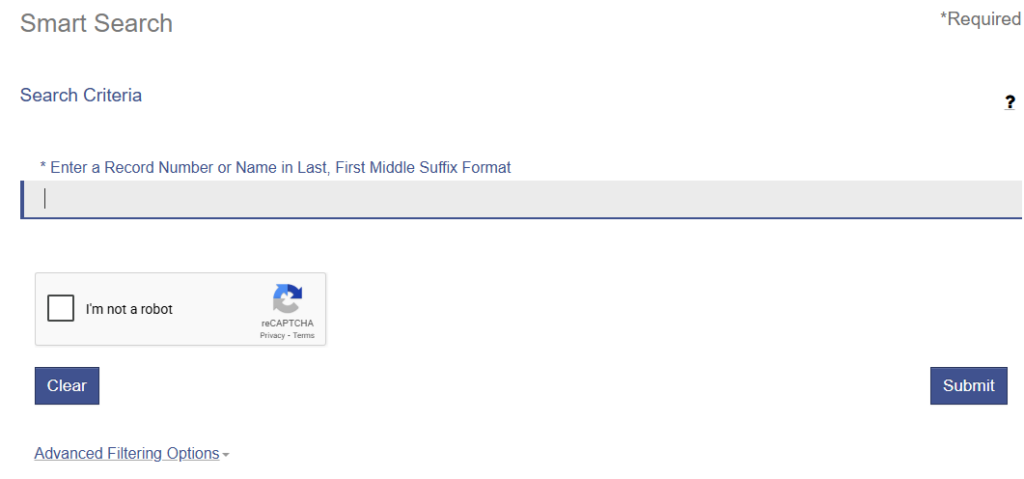
- Select Smart Search: Choose the Smart Search option to begin entering case details in a simplified search interface.
- Enter search details: Provide one or more of the following:
- Case number
- Party name (first and last name)
- Filing date or other available filters
- Submit the search: Click the search button to run the query in the court’s legal case database.
- Review the results: Scan the list of matching cases and identify the correct one using names, case numbers, or case type.
- Open the case record: Click on the selected case to view docket entries, filings, and case status details.
Types of Cases Available for Search
Santa Barbara court case search online supports multiple court case categories through the Superior Court of California, County of Santa Barbara. Users can perform a criminal case search, civil case search, and review other records like family court cases and probate matters. The system organizes records into clear groups within the legal case database, which helps users filter results based on the type of case. This structure improves accuracy and allows users to quickly locate relevant records using the public case search portal. Each category contains specific details tied to the nature of the case, making the search process more focused and efficient.
- Multiple case categories are available in one system
- Users can filter records by case type
- Results show structured case details and updates
- Supports quick lookup through the online docket search
Criminal Cases
Criminal cases involve charges filed against a person for violating laws. These records show how a case moves through the court system, including hearings and final outcomes. Users performing a criminal case search can view charges, court dates, and progress updates within the docket. Criminal case records help users follow legal proceedings and understand the stage of a case through the public case search system.
- Charges filed by the court or prosecutor
- Hearing schedules and trial dates
- Case status such as pending or resolved
- Plea entries and court decisions
- Updates on case progress over time
Civil Cases
Civil cases involve disputes between individuals, businesses, or organizations. These cases focus on resolving conflicts such as financial claims, property issues, or contract disagreements. A civil case search shows filings, motions, and judgments related to the dispute. Civil case records provide structured details that help users track how disputes are handled and resolved in court.
- Lawsuits between parties
- Small claims cases involving limited amounts
- Contract and property disputes
- Court filings and motions submitted by parties
- Hearing schedules and final judgments
Family Law Cases
Family law cases deal with personal and domestic matters between individuals. These include divorce proceedings, custody arrangements, and support orders. Family court records show filings, hearings, and case updates related to these sensitive matters. These records help users monitor ongoing family matters and review court decisions related to domestic relationships.
- Divorce and legal separation cases
- Child custody and visitation arrangements
- Child support and spousal support orders
- Court hearings and rulings
- Case progress and modifications over time
Probate Cases
Probate cases involve the legal process of managing estates after a person passes away. These records include wills, asset distribution, and court supervision of estate administration. A probate case search provides access to filings and updates related to estate matters. Probate records help ensure estates are handled according to legal requirements and documented intentions, with clear tracking through the court system.
- Wills and estate documentation
- Appointment of executors or administrators
- Court petitions and approvals
- Asset distribution records
- Scheduled probate hearings
Information Needed for Accurate Case Lookup
Case lookup Santa Barbara works best when users provide correct and complete search details within the court’s public case search system at the Superior Court of California, County of Santa Barbara. The system relies on structured search criteria to match records inside the legal case database. The clerk of court oversees record management processes that support accurate case indexing and retrieval. When users enter precise information, results appear faster and with higher accuracy. Using the right combination of identifiers helps narrow down records and reduces unrelated results. This approach improves the overall effectiveness of the court records lookup process. It also helps users avoid confusion when multiple cases share similar names. Clear inputs lead to quicker and more relevant results.
Required Details
To perform a successful case lookup Santa Barbara, users must provide at least one key identifier. These details allow the system to locate matching records within the database. Providing a case number usually returns the exact record, while a name search may show multiple matches. The system uses these inputs as primary search criteria to filter results and display relevant cases. In many situations, adding a middle name or additional identifier can further improve accuracy. Users should double-check entries before submitting to avoid missing the correct record.
- Full name of a party: first and last name
- Case number: most accurate search method
Advanced Filters
Advanced filters help refine results when searching through a large number of records. These filters improve precision and make the search more targeted. Using these filters allows users to limit results to a specific timeframe or category. This reduces irrelevant entries and helps locate the correct case more efficiently within the public case search system. Filters are especially useful when searching common names or cases with multiple entries. Combining filters with basic search inputs improves result clarity and speeds up the lookup process.
- Date range: filing date or activity period
- Case type: civil, criminal, family, probate, traffic
Court Docket and Case Details
A court docket search refers to a structured record of all actions and events in a case maintained by the Superior Court of California, County of Santa Barbara. It works as a timeline that lists filings, hearings, motions, and updates in chronological order. Users rely on docket information to understand how a case progresses from filing to final judgment. Each entry reflects a specific action taken by the court or parties involved. This makes it easier to follow the case history and review all legal filings in one organized place through the online legal database.
What a Court Docket Is
A court docket is a chronological record of all activities related to a specific case. It acts as a case timeline that tracks every legal step taken from the initial filing to the final decision. Each docket entry represents an event such as a filing, hearing, or ruling. Users reviewing docket information can see how a case develops over time. This structured format helps users understand the sequence of events and provides a clear view of the case history within the court case search system.
- Chronological list of case events
- Record of all legal filings and actions
- Timeline of hearings and rulings
- Summary of case progress from start to finish
- Central source for tracking legal activity
Details Included
Court docket entries include several important details that give users a complete view of a case. These details show what actions have taken place and what is scheduled next. Users can review filings submitted by parties, motions filed in court, and upcoming hearing dates. Each entry is time-stamped and linked to specific case events. This information helps users stay informed about the status and movement of a case within the legal system.
- Hearing dates – Scheduled court appearances and trial dates
- Filings – Documents submitted by parties or attorneys
- Motions – Requests made to the court for decisions or rulings
- Orders and rulings – Decisions issued by the judge
- Case status updates – Progress indicators such as pending or closed
How to Read Docket Entries
Reading docket entries requires attention to the structure and details shown in each record. Each entry typically includes a date, description of the action, and any associated documents. Users should look at the sequence of entries to understand how the case has progressed over time. Earlier entries show initial filings, while later entries reflect hearings, motions, or rulings. Reviewing docket entries in order helps users follow the full legal case timeline and interpret the current status of the case. Understanding docket entries helps users interpret legal filings and track case developments with greater clarity through the court docket search system.
- Check the date to understand when the action occurred
- Read the description for details about the filing or event
- Identify document links for related records
- Follow entries in chronological order for clarity
- Note updates that indicate changes in case status
Limitations and Restrictions of Court Case Search
Court case search limitations exist within the Superior Court of California, County of Santa Barbara to protect privacy and comply with legal rules. Not all case records appear in the public case search system, even though many are part of the court’s legal case database. Some records remain restricted or partially hidden due to privacy laws and court policies. These restrictions help maintain confidentiality while still allowing public access to eligible records through the online docket search. Users should understand that the system does not include every case filed in the court.
Not All Cases Are Publicly Accessible
Some court records are not available through the public case search due to legal and privacy limitations. These restricted records are either sealed by the court or protected under specific rules. Users performing a court records lookup may notice missing cases or limited details for certain entries. This happens because the court controls which information can be shared online. Public access is provided only for eligible cases, while sensitive records remain unavailable or require special permission to view.
- Sealed or confidential cases are excluded from public view
- Some documents may be partially hidden or redacted
- Certain case details are limited to summaries only
- Full records may require in-person requests
Confidential Case Types
Certain case types are automatically treated as confidential under privacy laws. These cases are restricted to protect sensitive information and the individuals involved. Even if a case exists in the legal system, it may not appear in the online search or may show limited details only. These restrictions ensure that private information is not exposed through public access systems.
- Juvenile cases – Records involving minors are protected
- Sensitive family matters – Some custody or domestic cases may have restricted details
- Sealed cases – Cases ordered by the court to remain private
- Protected identities – Cases involving victims or vulnerable parties
Legal Restrictions on Data Access
Access to court case information is governed by privacy laws and court rules that define what can be shared publicly. These legal restrictions limit the availability of certain records in online systems. Users may not be able to view full documents, especially in cases involving confidential matters. In some situations, authorized requests or formal applications may be required to obtain complete records. The court follows strict policies to balance transparency with privacy protection. These restrictions help maintain the integrity of the court system while protecting sensitive legal and personal data.
- Privacy laws control what information can be displayed online
- Some records require official requests for full access
- Sensitive data may be redacted or withheld
- Access may depend on user eligibility or case type
- Courts limit exposure of personal or confidential information
Location and Contact Information
Santa barbara court contact details help users reach the Superior Court of California, County of Santa Barbara for inquiries related to records, filings, and general court services. This information is useful for users who need assistance beyond the online case search system. While many records are available through the public portal, some situations require direct communication with the clerk’s office. Having accurate contact details ensures users can connect with the correct department for their specific needs.
Court Address
The main courthouse locations serve different divisions of the court, including civil, criminal, and family matters. Users should confirm the correct location before visiting, as services may vary by branch. Visiting the correct address helps users handle in-person requests, filings, or certified record requests without delays.
- Santa Barbara Courthouse (Main):
1100 Anacapa Street
Santa Barbara, CA 93101 - Additional branch locations may exist for specific case types or services
Phone Number
Users can contact the clerk’s office for general questions related to case records, filings, or court procedures. Phone support can assist with directions, case status inquiries, and general guidance on court services. Calling ahead may help confirm office availability or required documents before visiting.
- Main phone: (805) 882-4520
Office Hours
Court office hours are set to support public services during weekdays. Hours may vary slightly by location, so users should verify before planning a visit. Arriving during office hours ensures access to clerks and in-person services such as record requests or filing assistance.
- Monday to Friday: 8:00 AM – 4:00 PM
- Closed on weekends and court holidays
Frequently Asked Questions
Santa Barbara court case search FAQ section helps users get quick answers about case lookup questions and court records help. These questions address common concerns about using the online system provided by the Superior Court of California, County of Santa Barbara. The responses below explain how the public case search works, what records are available, and what limitations users may face when using the legal case database. Users can rely on this section to better interpret search results and understand what type of information is visible online. It also helps set expectations before starting a search. Clear answers reduce confusion and improve search efficiency. Users can quickly decide which search method fits their situation. This section supports both first-time users and frequent users of court records.
How do I search for a court case in Santa Barbara?
Users can search a court case by visiting the official court website and opening the case records search portal. From there, they can enter details such as a case number or party name into the search fields. After submitting the query, the system displays matching results. Users can then select the correct case to view docket entries, filings, and case status. Using accurate information improves the chances of finding the correct record quickly. It is helpful to double-check spelling before submitting a search. Narrowing down results can save time when multiple cases appear. Reviewing filters like case type can further refine the output. Users should also note that similar names may produce multiple matches.
Can I find criminal case records online?
Yes, many criminal case records are available through the public case search system. Users can perform a criminal case search using a name or case number. The results may include charges, hearing dates, and case progress. However, some criminal records may be restricted or partially hidden due to privacy laws or sealed case status. Public access depends on the nature of the case and court restrictions. Not all details may appear for ongoing or sensitive cases. Users should review available summaries to confirm relevance. Additional details may require direct court contact. Some entries may only show limited docket updates. This helps protect sensitive legal information while still offering public visibility where allowed.
What if I don’t have a case number?
If a case number is not available, users can still perform a search using a party’s full name. Entering the first and last name into the search tool will return a list of possible matches. Users may need to review multiple results to identify the correct case. Adding optional filters such as case type or date range can help narrow down the results and improve accuracy when no case number is known. Including middle initials can further refine results. Reviewing case summaries helps distinguish similar names. Careful filtering reduces unrelated matches. Users can also try alternative spellings if the name returns no results. Cross-checking known details like location or filing date improves precision.
Are all court records public?
Not all court records are public. Some cases are restricted due to privacy laws, court orders, or sensitive subject matter. Examples include juvenile cases, sealed records, and certain family law matters. Public case search tools only display records that are legally available for public viewing. Users may need to request access directly from the court for certain documents or restricted files. Confidential records are protected to maintain privacy and legal compliance. Access to these records typically requires authorization. Public portals will not display sealed case details. Restrictions help safeguard personal and sensitive information. Users should expect limited visibility for protected categories of cases.
How accurate is online case information?
Online case information is generally reliable but may not always reflect the most recent updates in real time. The court notes that data is provided for informational purposes and may contain minor errors or omissions. Users should verify critical details directly with the court if needed. For official use, certified records obtained from the court are considered the most accurate and authoritative source of information. Updates may take time to appear in the system. Users should cross-check important dates and entries. For legal purposes, certified copies remain the standard reference. Some docket entries may lag behind recent filings. Confirming directly with the clerk’s office helps avoid discrepancies.